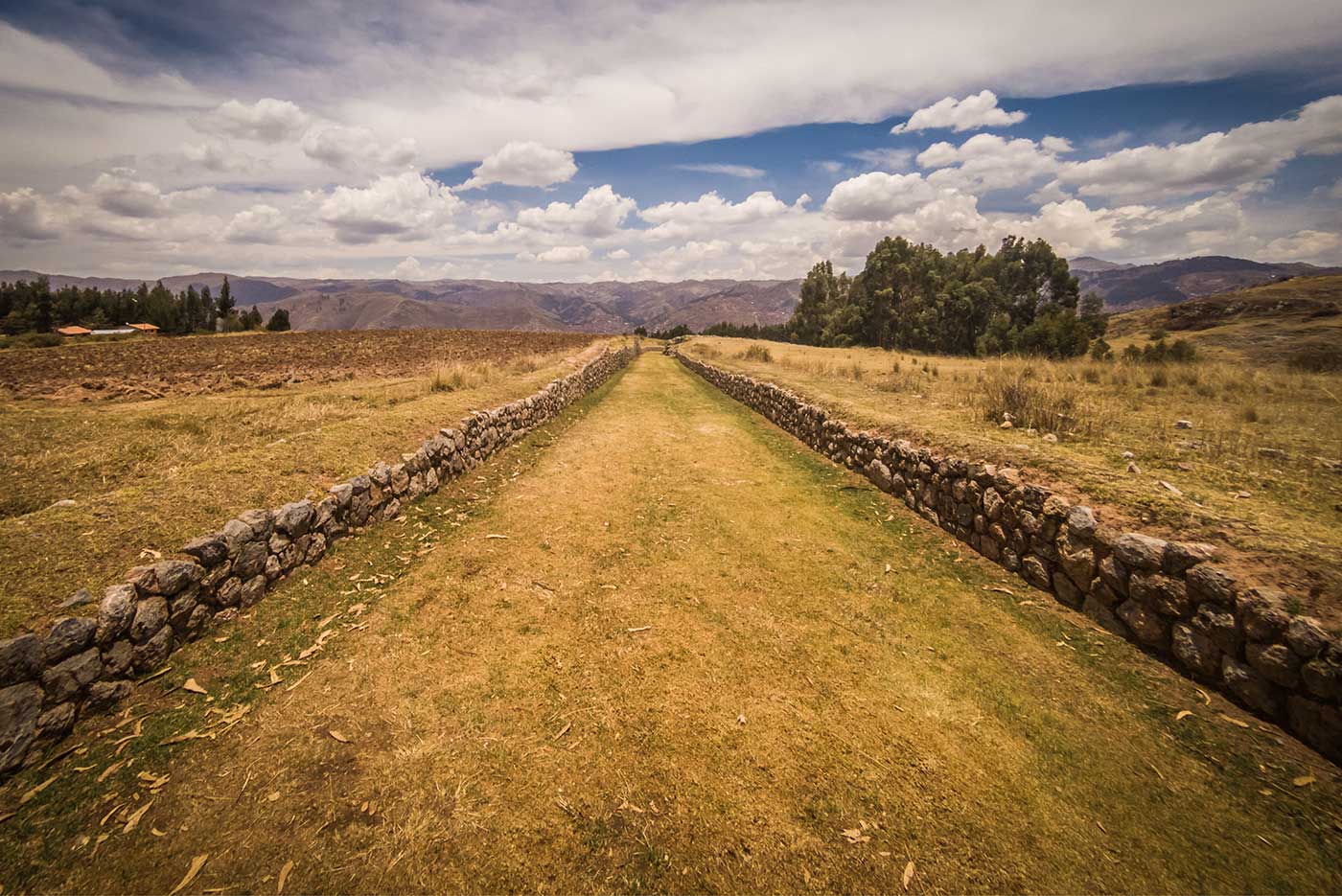
The Qhapaq Ñan, which in Quechua means “main road,” was one of the most impressive engineering feats of the Inca Empire. This extensive network connected cities, administrative centers, and sacred sites throughout the Andes, enabling communication, trade, and exchange between different regions.
It is estimated that the Qhapaq Ñan spanned 30,000 to 40,000 kilometers, crossing territories that are now part of Peru, Ecuador, Bolivia, Chile, Argentina, and Colombia.
The system was essential for the political, military, and economic control of the empire, facilitating the transport of armies, goods, and rapid communication between regions.
Beyond enabling territorial expansion, the Qhapaq Ñan played a key role in the administration of the Inca Empire, helping to redistribute resources and maintain control over the various Andean peoples and territories.
The Chasquis: Messengers of the Inca Empire
The functioning of the Qhapaq Ñan also relied on the Chasquis, messengers who traveled long distances on foot to deliver information, imperial orders, and important items.
These runners used a relay system between tambos, small stations located along the roads. Thanks to this system, messages could travel quickly across the empire, enabling efficient communication between the different Andean regions.
Engineering and Adaptation to the Andes
One of the most remarkable aspects of the Qhapaq Ñan is its extraordinary adaptation to the complex geography of the Andes.
The roads crossed mountains, valleys, rivers, and deserts, using different construction techniques to overcome the natural challenges of the terrain. Some of the most notable structures included:
- Stone staircases carved into steep slopes
- Hanging bridges made from plant fibers, used to cross deep rivers
- Paved paths designed to resist erosion and withstand the test of time
Despite extreme geographic and climatic conditions, the Incas developed advanced engineering techniques that allowed them to build safe and durable routes through some of the most challenging landscapes in South America.
Tambos: Rest and Supply Centers
Along the routes of the Qhapaq Ñan, there were also tambos, which served as rest and supply centers for travelers, imperial officials, and messengers.
In these spaces, people could:
- Recover energy during long journeys
- Store food and tools
- Organize the transport of goods throughout the empire
Tambos were an essential part of the Inca road system’s infrastructure and contributed to the efficient functioning of the entire network of roads.
A Legacy That Lives On in the Andes
Today, many of these ancient roads are still in use. Some of the most famous trekking routes in the Andes follow original sections of the Qhapaq Ñan.
A notable example is the Inca Trail, one of the most famous hikes in the world, leading to the citadel of Machu Picchu.
Thanks to these routes, travelers can walk paths that were used centuries ago by the Incas, combining history, culture, and nature in a truly unique trekking experience in Peru.
Recognition as a World Heritage Site
On June 21, 2014, the Qhapaq Ñan was recognized as a World Heritage Site by UNESCO.
This international recognition highlights the importance of the Inca road system as one of the most extraordinary engineering achievements of pre-Columbian civilizations.
In addition, the designation has promoted various research, conservation, and protection projects aimed at preserving this historic and cultural legacy that connects multiple countries across the Andean region.
The Legacy of the Qhapaq Ñan Today
The Qhapaq Ñan was not just a network of roads, but a fundamental infrastructure for the organization and expansion of the Inca Empire.
Today, it represents an extraordinary legacy of engineering, culture, and history, continuing to connect landscapes, communities, and traditions throughout the Andes.
Walking these ancient paths allows us to better understand how the Incas managed to build one of the most impressive communication and transportation systems in history.
 March 16, 2026
 9:29 pm
 peruqualitytreks
